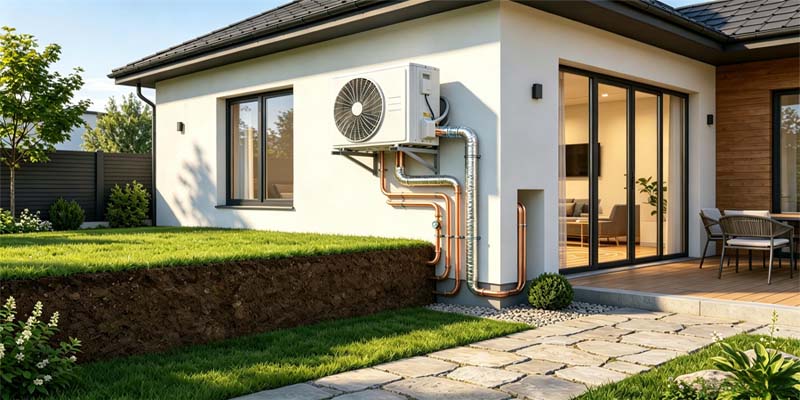
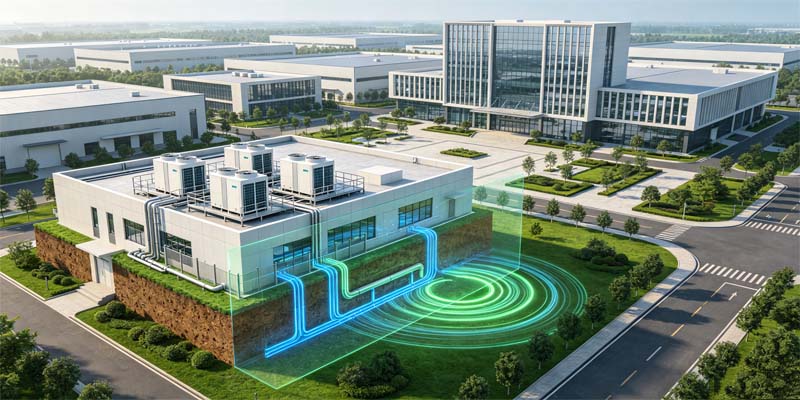
{ Residential Air Source Heat Pump }

  • Is a Tri-Generation Heat Pump Worth Buying?

    In heat pump series, a tri-generation heat pump (or tri-mode/trigeneration system, providing space cooling, underfloor heating, and domestic hot water) has long been a subject of considerable debate. In the propaganda, it provides cooling and recycles the exhaust heat at the same time to generate "free hot water." Replacing the central air conditioner, ground heating, and water heater with an outdoor unit—that sounds full of cost-effectiveness. In reality, some customers installed it in hotels and villas, and their annual energy consumption reduced, but other customers face problems as well. The water temperature is not stable, there are frequent malfunctions, there is an increased bill, etc.


    I. What is a tri-generation heat pump? What is the difference compared to a dual-fuel heat pump?


    Dual fuel heat pumps: Supplying cooling and space heating only, the domestic water heating will need an additional water heater.

    Tri-generation heat pump: Supplying cooling, space heating, and domestic water heating in the same machine. Its core part is the comprehensive heat recovery module. When cooling in summer, the machine recycles the exhaust heat from the compressor for domestic water heating. This is what we call "producing hot water while cooling" in the industry.


    II. Advantages of tri-generation heat pumps


    1. Three-in-one functionality, space-saving, and equipment-saving


    In the common solutions, villa projects need outdoor units for central air conditioning, ground heating, and water heating. The spaces left for the outdoor unit are insufficient, and the piping and cable connections are complex. Tri-generation heat pump utilizing an outdoor unit to shoulder the cooling loads of all indoor fan coil units, ground heating supply, and domestic water heating. The lesser quantity of outdoor units simplifies the installation layout and makes the home exterior more aesthetically pleasing.


    2. Summer Cooling with Waste Heat Recovery: Drastic Reduction in Hot Water Energy Consumption


    Cooling in summer is where a tri-generation heat pump truly shines. The cooling process exhausts massive waste heat, which is utilized for domestic water heating without exhausting outside. In tropical areas in the long summer season, heating water consumes very little additional electricity. The energy consumption for hot water could reduce 70%-80%. This advantage would be endlessly enlarged for commercial hotels in such summer seasons that need abundant cooling and water heating.


    3. High system integration reduces total equipment investment for commercialprojects


    Cooling, heating, and 24-hour hot water are essential demands for places such as hotels, hospitals, and nursing homes. Tri-generation heat pumps could reduce the cost for purchasing large water heaters. Managing everything through one integrated system would reduce initial costs pilled for multiple machines. The maintenance cost is just for one maintenance system.


    4. Flexible switching between multiple modes


    Standard tri-generation heat pumps provide multiple modes: independent cooling, heating, or hot water production, as well as combined cooling + hot water or heating + hot water. It can switch to different modes according to the demand, complying with various conditions all year round.


    III. Shortcomings of tri-generation heat pumps


    1. Complex system and high barriers to installation and commissioning.


    Compared with dual fuel heat pumps, a tri-generation heat pump has additionally heat recovery exchangers, hot water tanks, hydraulic valves, and hydraulic balancing units. If the design is unreasonable, such as the absence of buffer tanks or inadequate hydraulic system commissioning, the problems will occur, like fluctuating hot water temperatures, frequent unit cycling (start-stop), and degraded cooling performance. The system requires technicians with high levels of expertise in hydraulic calculation and commissioning. Normal HVAC technicians are not qualified for this work. Otherwise, post-installation malfunctions appear more frequently compared to dual-fuel heat pumps.


    2. The heat recovery advantage is lost outside the cooling season.


    Free hot water generated from waste heat is only available during the cooling in summer. No waste heat is available during the period of heating in winter (heating only) or the spring and autumn transition seasons (hot water production only). In those conditions, the system's energy efficiency for hot water production is not as good as air-source heat pump water heaters, with no "free hot water" benefits.


    3. Higher initial investment; payback period depends on usage intensity.


    The overall cost for a tri-generation heat pump is higher than a dual-fuel heat pump, no matter if it is for residential or commercial use.


    Residential: Only when the scale of the house is large, the hot-water demand volume is high, and the cooling period is long in winter shall we gain the payback that is equal to the price difference between the two different systems.

    commercial: Only for full-year operation, cooling/heating and hot water demands simultaneously shall the payback period be shortened


    4. Risk of heat exchanger scaling and corrosion; water quality maintenance is crucial.


    Domestic tap water directly passes through the plate for heat exchange, and in areas with high water hardness, the heat exchanger is prone to scaling; long-term use poses a risk of corrosion and leakage. Once there is water leakage, it can damage the refrigerant system and the entire unit. Regular maintenance and cleaning are required, and it is recommended to add water treatment accessories in areas with poor water quality.


    A "tri-generation" heat pump system is not simply an upgraded "universal" heat pump; its core value lies in the recovery of waste heat generated during summer cooling.

    The value of a tri-generation system is fully realized when there is prolonged cooling demand and high hot water consumption during the summer.

    Conversely, if hot water demand is low, transitional seasons are frequent, or a reliable installer cannot be found, a "dual-generation" system combined with a separate hot water unit is the better choice, as it entails lower risk.
     

  • Ground-Source vs. Air-Source Heat Pumps How to Choose for Residential and Commercial Use?

    Under the background of "dual carbon" goals, heat pumps have become the mainstream in cooling and heating retrofits in residential and commercial buildings. While many hosts will hesitate whether choosing a ground-source heat pump or an air-source heat pump.


    Many people refer to the COP value on the paper only, mistakenly regarding that the ground-source heat pump is absolutely better than the air-source heat pump. In actual projects, large ground-heating projects are limited by site conditions, geology, and high initial investment costs. There are also normal air-source heat pumps with decreasing performance in extremely cold areas.


    I. Mechanisms between air-source heat pump and ground-source heat pump


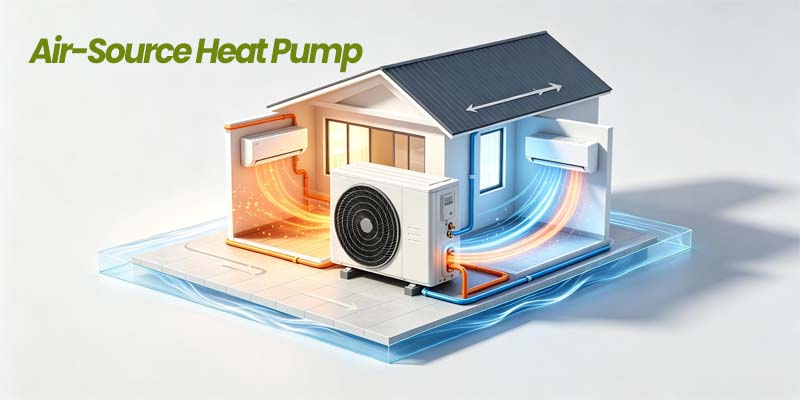
    The air-source heat pumps utilize exterior air as the source in the heat-exchanging procedure. Same as traditional air conditioners, they consume electricity to transfer heat from the air. They extract heat from the air for heating in winter and exhaust indoor heat to the outdoors for cooling in summer.

    Drawbacks: Outdoor temperatures deeply affect its performance; frosting occurs in cold environments—requiring additional energy for defrosting—and heating efficiency drops significantly in extreme cold.


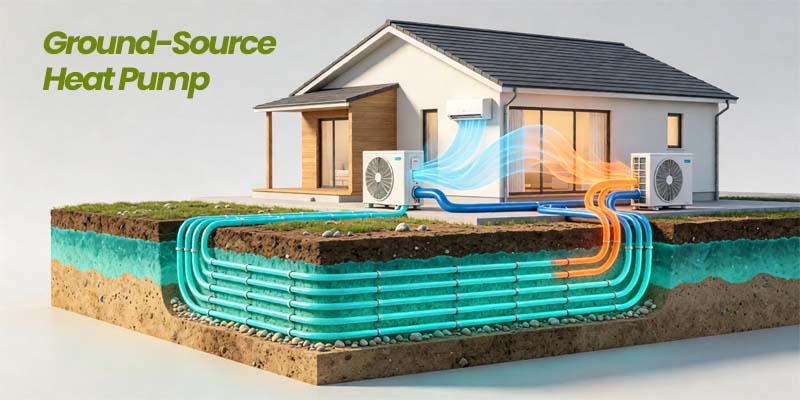
    The ground-source heat pumps (closed-loop soil-source system) exchange heat with shallow underground soil via buried piping. The temperature of soil remains stably at 10–18°C normally, hardly ever affected by seasonal fluctuations in ambient air temperature. It extracts heat from the soil in winter and deposits heat from the building into the soil in summer, creating a heating and cooling cycle.

    Advantages: stable annual Coefficient of Performance (COP) with minimal performance degradation during extreme cold or heat; underground piping lifespan of up to 50 years. But in installation, it will use more piping under the ground or drilling. It is a huge project, which is not just to buy equipment.


    II. Comparison between Air-Source and Ground-Source


    1. Initial cost and installation


    Air-source heat pumps: With a small starting charge, the heat pump units require only an outdoor unit without necessitating well-drilling or large-scale excavation. Fast installation, they are suitable for many building scenarios, such as retrofitting existing homes and high-rise residential buildings.

    Ground-source heat pumps: Except for the unit cost, there are additional charges for drilling, installing underground piping, and conducting geological surveys. The total cost at the beginning is almost 1.5 to 2 times that of air-source systems. They are suitable for new construction projects but are difficult to implement in existing buildings due to site constraints.


    2. Operational Energy Consumption and Stability


    Air-source heat pumps: Their performance is excellent in regions with hot summers and cold winters. However, in extreme cold (temperatures under -10 to -15°C), energy efficiency drops significantly, and defrosting cycles will increase electricity costs. In the meantime, cooling capacity also experiences a slight decrease under the extreme hot ambient temperature.

    Ground-source heat pumps: They are mostly affected by ambient temperatures; instead, they could deliver stable output in both extreme cold and extreme heat, resulting in lower long-term electricity costs. While the system includes a ground-side water pump, which incurs a certain amount of fixed energy consumption, additionally, a long-term imbalance between heating and cooling loads can cause soil temperature drift, leading to a gradual decline in energy efficiency over time.


    3. Noise and Comfort


    Air-source heat pumps: The machine is put outside of the house; the noise will be generated from the compressor and fan blade. This makes the noise reduction measures necessary for low-rise residences or when the unit is located near a bedroom.

    Ground-source heat pumps: The heat-exchange parts are put under the ground, and the equipment is put in a designated room or place. There is no noise outside that makes it more quiet, suitable for vellas, hotels, hospitals, and other noise-sensitive places.


    4. Maintenance and Lifespan


    Air-source heat pumps: Simple maintenance; we only need to clean the heat exchanger and check if the refrigerant is sufficient. The machine has a lifespan of around 15-20 years. The supply chain is mature, which makes aftersales service more convenient.

    Ground-source heat pumps: Maintenance-free for the underground pipes, we just need to care about the machine. The installation quality at the beginning directly determines the performance in the coming decades. The leakage of the underground pipes will bring difficulties to the maintenance and fixing, which requires highly professional teams for the installation.


    5. Investment Payback Period


    Residential scenarios: The exceeded cost for the ground-source system normally needs 5-8 years to pay back. If the planned utilization period for the house is no more than 5-8 years, then the recovery of the cost is a bit hard.

    Commercial scenarios: The operation is continuous all year round in hospitals, schools, hotels, etc. The ground-source heat pumps have stable loads, which makes their payback period shortened to 4-6 years with a considerable profit in the long term. For small shops and short-term rental projects, the air-source heat pump is more cost-effective.


    III. How to choose for residential use


    Conditions for air-source heat pump:


    • High-rise residential buildings or urban housing lacking the open courtyard space required for drilling and pipe burial;
    • Limited budget; intended holding period of less than eight years;
    • Located in southern regions characterized by hot summers and cold winters, with rare occurrences of sustained extreme cold;
    • Renovation project for an existing building, unsuitable for large-scale civil engineering work.


    Conditions for ground-source heat pump:


    • Suitable for detached villas or self-built homes with ample yard space to accommodate borehole drilling and underground piping;
    • Intended for long-term owner-occupancy, with a planned holding period of over 15 years;
    • Located in a severe cold climate, requiring high stability in winter heating performance and low noise levels;
    • Ample budget; willing to accept higher upfront costs in exchange for lower energy consumption over the system's entire lifecycle.


    A tip for homeowners: Do not blindly fixate on the higher COP of ground-source systems. The additional energy consumed by water pumps and the high cost of drilling boreholes can erode some of the electricity savings; furthermore, if the site lacks sufficient space or has poor geological conditions, forcing the installation of a ground-source system will significantly compromise its performance.


    IV. How to choose for commercial use


    Conditions for air-source heat pump:


    • Small- to medium-sized commercial properties, including retail shops, small guesthouses, and offices with a building area of up to 5,000 m².
    • Projects with a limited site that prohibits large-scale excavation or construction.
    • Rental properties with short operational lifecycles, prioritizing rapid implementation and low initial investment.
    • Commercial projects in tropical or subtropical regions, where ambient temperatures are friendly to air-source heat pumps' energy efficiency.


    Conditions for ground-source heat pump:


    • New public buildings with large-scale facilities such as schools, hospitals, hotels, and industrial parks. They have extensive floor areas and stable heating and cooling loads throughout the year;
    • Self-owned properties, long-term operational properties, and the one pursuing optimizing long-term operating costs;
    • Planed green spaces and open areas where the installation of underground piping is available, and their geological conditions are favorable;
    • Places under conditions of extreme cold or sustained high heat where the systems must deliver stable output year-round and minimize the equipment failure rates.


    Commercial Pitfall Avoidance: Ground-source heat pump systems do not automatically become more efficient over time. If the building's cooling load in summer significantly exceeds its heating load in winter (or vice versa), thermal imbalance in the soil occurs; this leads to a continuous decline in system efficiency after a few years. Therefore, at the beginning, we need to calculate the thermal balance. If necessary, auxiliary cooling towers or heat dissipation equipment are needed.


    There is no single "perfect" solution; the choice replys on three key factors: site availability, the intended service life, and the budget.

    Many projects employ hybrid systems—pairing a ground-source system with an air-source auxiliary unit—to balance initial investment costs against operational energy efficiency; this has become the prevailing approach for commercial projects. Before final implementation, it is advisable to conduct a comprehensive life-cycle cost analysis that takes local climate and geological conditions into account.

    We are a professional heat pump manufacturer; if you have any questions about our products, please feel free to contact us!