{ Split Air Conditioner Manufacturer }

  • Global Air Conditioner Manufacturers Industry Landscape and Future Trends

    The air conditioning industry is undergoing an unprecedented development opportunity under the background of global climate change and the acceleration of urbanization. From traditional residential air conditioners to industrial cooling systems and the combination of intellectualization and energy-saving technologies, air conditioner manufacturers are now rebuilding the market landscape continuously.


    I. Overview of the global air conditioning industry


    Currently, the global air conditioning market is dominated by three major areas: Asia, Europe, and North America. In which the manufacturers from China, Japan, and South Korea have obvious advantages in production scale and the integration of supply chains, while European companies occupy the main position in high-end technology and brand reputation.

    With the swift increase of demand among emerging markets (such as Southeast Asia, India, the Middle East, and Africa), the air conditioners are converting from "luxury products" into "basic life necessities." This pushes the global manufacturers to expand production capacity continuously and optimize the product structure.


    II. Types of major air conditioner manufacturers


    1. Comprehensive home appliance giant

    This type of enterprise is normally equipped with complete production lines, ranging from residential air conditioners to commercial central air conditioning systems, obtaining powerful R&D capability and global channel networks.


    2. Professional HVAC companies

    They concern industrial and commercial fields, playing an important role in large building, data center, and fundamental equipment construction.


    3. Emerging technology-driven companies

    They stress intellectualization, the internet of things (IoT), and energy efficiency, improving users' experience through software and hardware.


    residential air conditioners


    III. Technical improvement trend


    1. Energy-saving and environmental protection

    With the progression of global carbon peak orientation, the industry is moving toward a destination with higher efficiency air conditioners and more eco-friendly refrigerants.


    2. Intellectualization and IoT

    Intelligent air conditioners can achieve remote control through mobile apps and adjust the operation automatically according to the environment.


    3. Modularization and customization

    The manufacturers provide more flexible solutions according to different scenarios, such as hospitals, data centers, and industrial workshops.


    IV. Supply chain and market competition


    In recent years, the raw material price fluctuations and global logistics challenges put stress on air conditioner manufacturers. They start to strengthen the localized production landscape to reduce risks in the supply chain. Meanwhile, competition between brands converts from price to technical and service abilities.


    V. How does KRG behave in the industry?


    Among those participants, KRG air conditioning gradually becomes an emerging power that is worth concern. In the integration of supply chain and zoning-market expansion, KRG behaved with stronger flexibility. Particularly in the middle-class market and customization field, KRG has advantages in the competition.


    Through strengthened quality control and cost-optimizing strategies, KRG had found itself in the fierce competitions. At the same time, the company is gradually laying out intellectualized technology to improve the additional product value and customers' experience.


    There are distances between KRG and the leading companies, but their development paths demonstrate a classic growth pattern of emerging manufacturers in the global air conditioning industry.


    VI. The future trend


    The global air conditioner manufacturing industry is now on a vital stage of conversion and upgrading. From traditional production to intellectual manufacturing, and from a single product to systematic solutions, every company is seeking a point of growth. No matter if it is the industrial giant or an emerging power like KRG, we are all playing an important role in the process.


    In the coming years, the air conditioning industry is moving forward in the following directions:

    Higher utilization efficiency of energy;

    Smarter intercommunication among users;

    More eco-environmentally manufacturing and the materials;

    More flexible global supply chain.


    As for the air conditioner manufacturers, only balancing the technical innovation, cost control, and market insight will let us stand out in the global competition.

  • Air Conditioner CBU vs. SKD/CKD Which One Is More Suitable for Your Market?

    In the international trade of air conditioners, importers usually face a vital decision: to import whole units (CBU) or parts to assemble (SKD/CKD)? This not only influences cost structure but also relates to the customs tax, brand strategy, and market competitiveness. The article is to clarify this issue from the perspective of business.


    I. What's CBU?


    "CBU" (completely built up or completely built unit) means products from the factory are complete units and sold directly.

    Features:

    Fully completed production and test;

    Ready to install and use;

    High level of standardization.


    Advantages:

    Easy operation, no need to assemble again;

    Stable quality (central quality control by the factory);

    Quick entrance to the market;

    Fewer quality issues.


    Disadvantages:

    High import tax normally;

    Limited space for branding distinctiveness;

    Less profit space.


    Suitable partners:

    Newly established importers;

    Distributors and contractors;

    Small batch of trial orders.


    II. What's SKD/CKD?


    SKD: Semi Knocked Down;

    CKD: Completely Knocked Down.


    Features:

    Accessible to assemble in destination countries;

    Available to design and produce locally.


    Advantages:

    Low importing tax (governmental support on local assembly);

    High-profit space;

    Access to build local brands;

    Access to get political support (such as a tax discount).


    Disadvantages:

    It requires a factory and assembly lines;

    The quality requires local management;

    High initial investment.


    Suitable partners:

    Importers with local resources;

    Buyers pursue branding;

    Companies with long-term market strategies.


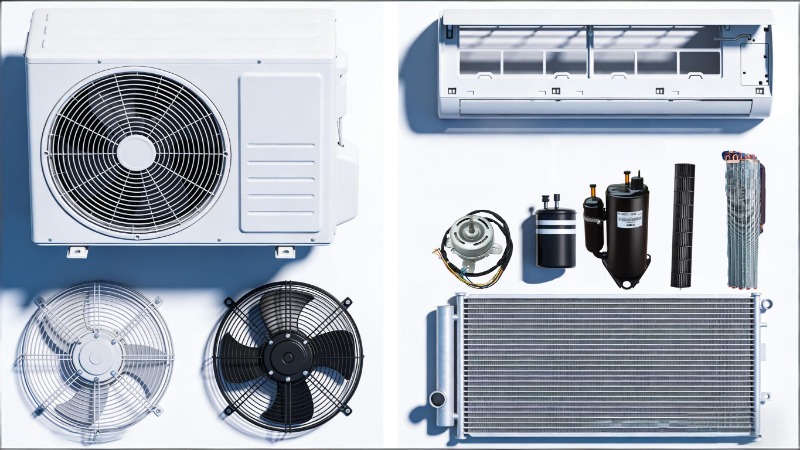
    Air conditioner SKD kits


    III. Best options for different markets


    Middle East (e.g., KSA/UAE)

    Recommend: SKD/CKD;

    Tax policies support local assembly;

    High demand of air conditioning units

    Suitable for building a long-term brand.


    Africa (e.g., Nigeria/Kenya)

    Recommend: SKD and CBU combination;

    Early stage: Complete units entering the market first;

    Late stage: Convert to SKD to lower the cost.


    South America

    Recommend: CKD;

    Complex tax policies;

    Local assembly is more advantageous.


    Europe

    Recommend: Complete units;

    Complex certification policies;

    Much stress on product consistency.


    IV. What can KRG provide?


    As an export-oriented manufacturer, KRG provides:

    Complete bult units supply;

    SKD/CKD solutions;

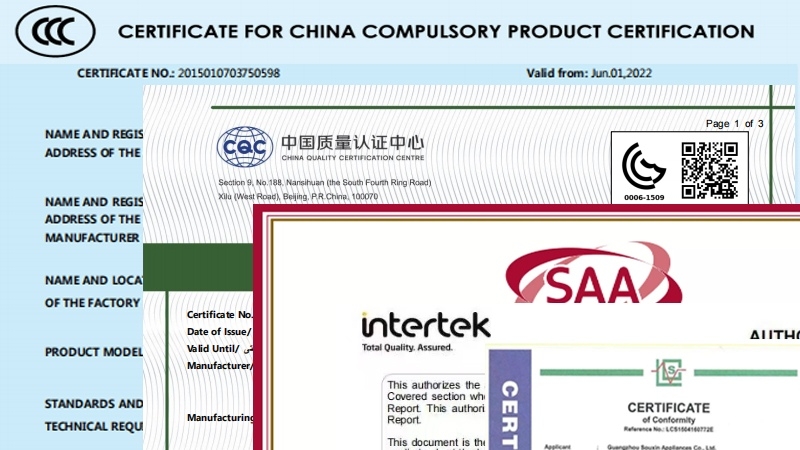
    Multiple certificates (CE/GCC/SASO/ISO);

    OEM/ODM branding;

    Various market adaptations (220V60Hz, 110V60Hz air conditioners, T3, R290, Inverter, etc.)

    We can help customers convert from importers into brand owners.


    V. When should you convert from CBU to SKD?


    When there are signs below, you will need to take actions:

    Increasing purchasing demand year by year;

    Tax occupies large portion of total cost;

    Eager to build a self-owned brand;

    Able to assemble locally.


    There's not a business model that's absolutely better, but a strategy more suitable for your market. It is not recommended to go "all in SKD" and "stop in complete units." The best way is to start with complete units, transit with SKD, and finally build local brands.


  • How to Select Air Conditioner for Hotel and Apartment Projects?

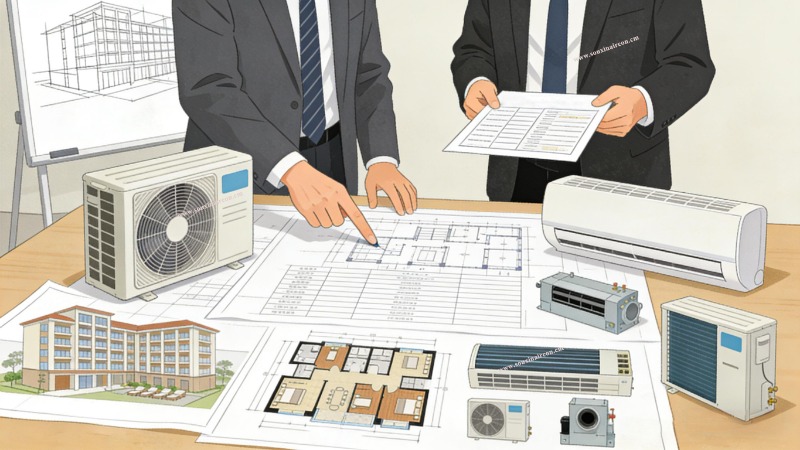
    In real estate projects like hotels and apartments, an air conditioning system not only influences the comfort of guests but also relates to the cost of investment and operation and the maintenance efficiency. For the building developers and project contractors, choosing a proper air conditioning system is a technical decision that requires comprehensive consideration.

    This article will analyze the key factors that need to be considered when choosing air conditioning equipment for hotels and apartments from the perspective of practical engineering applications.


    I. Confirm the type of project: hotel or apartment


    Though the hotels and apartments have similarity in building structure, the utilizing modes are obviously different.

    Hotel project features:

    Frequent use of rooms with high turnover;

    High pursuit for comfort;

    Centralized management of appliances at front desk or backstage;

    Long-period operation of air conditioners.


    Apartment project features:

    Fixed users;

    Concerning on unit price and maintenance cost;

    Individually controled air conditioners;

    Less demand for centralized management.


    II. Common air conditioning systems


    1. Split air conditioning system


    The split system is one of the most widespread air conditioning systems, particularly in small and medium hotels and apartments.

    They have advantages including a small initial investment, simple installation, easy maintenance, and individual unit control.

    But if the amount increases, there will be many outdoor units hanging outside of the building, which brings difficulty for the management of the exterior wall.

    They are suitable for economic hotels, apartments, and renovation projects.


    2. VRF/VRV


    Variable refrigerant flow (VRF) or variable refrigerant volume (VRV) systems are more and more popular among middle- and high-class hotels and service-driven apartments.

    They can connect multiple indoor units to one outdoor unit with a high EER, enabling central management.

    But the initial cost for the system is high, and the installation and design are complex, which requires high-quality installation.

    They are usually adopted by 4-star and above hotels, service-driven apartments, and middle- and high-class commercial residential projects.


    3. Ducted air conditioning system


    Duct air conditioners are common solutions for many hotel projects, with both cost-effectiveness and beauty.

    They can hide inside the ceiling with high aesthetics, even airflow, and considerate comfort and a lower cost than a VRF system.

    But still, each room needs a system individually, and the maintenance will destroy the ceiling, which brings cost and complexity.

    They are suitable for commercial hotels, middle- and high-class apartments, and long-term rental apartments.


    III. Factors needs to consider when selection


    1. initial cost


    It includes the unit cost of air conditioners, installation costs, and the consumed material cost.


    2. Energy efficiency


    The air conditioning system is the most energy-consuming equipment in hotel buildings. High-efficiency air conditioners can obviously reduce operation costs in the long term.


    3. Maintenance and aftersales


    Hotel projects normally own dozens or hundreds of rooms, so the maintenance flexibility is very important.


    4. Building facade management


    If each room owns an individual air conditioning system, there will be too many outdoor units outside of the wall. Then the appearance of the building is a bit messy, and the noise is also a problem.

    In that case, many newly built hotels tend to use VRF systems and centralized air conditioning systems.


    5. Climate conditions


    Different countries, different climates, different air conditioner selections.

    Middle East: Requires air conditioning for high-temperature operation.

    Southeast Asia: Dehumidification is important.

    Europe: Greater emphasis on energy efficiency and environmental protection.


    It's not just a matter of unit price but a comprehensive consideration among initial cost, energy efficiency, installation, maintenance, and building design. A proper air conditioning system not only improves customer experience but also reduces the long-term operation cost. For developers and engineering procurements, a reasonable air conditioning system will significantly increase the overall value of the project.

  • What Do Conditioner Importers Concern Most When Purchasing?

    In the global trade of air conditioners, buyers normally care about not only the price but also the suppliers and products when they are selecting them.

    For the air conditioner distributors and branding sellers, their concerns are whether the product suits the market stably and reliably and if the cooperation is continuous.

    So, what do conditioner importers concern most when purchasing? Knowing the points will not only help the suppliers treat clients well but also help buyers to make reasonable decisions when purchasing.


    I. Quality and reliability


    For the importers, product quality is the most important key point. As the air conditioners are durable consumer goods, once the quality issue happens, then the after-sales service will cost and may even influence the brand's frame. So importers normally place deep concerns on the following:


    Compressor brand and reliability,

    Key components (electric control, fan motor, capacitor, etc.),

    Lifespan and stability,

    Systematic quality control of the factory.


    Many buyers will ask for test reports and certificates from the suppliers. Stable quality is more attractive than a lower price.


    II. Whether the product comply with the local certifications


    Different countries and regions have different regulations and certification requirements. Such as CE (European market), SASO (KSA market), GCC (Gulf countries), CCC (China), ERP (Europe), etc.

    If the product is not certified accordingly, importers normally cannot complete the custom clearance and distribute it. So many importers will ask in advance:


    Whether the product complies with local certifications,

    Whether the product comply with the local voltage and frequency,

    What's the energy efficiency class?


    Suppliers with a complete certification system will more easily gain long-term cooperation opportunities.


    III. Price and market competitiveness


    Unit price is absolutely a key factor when purchasing, but importers normally concern themselves with market competitiveness instead of the lowest price.

    They will check comprehensively:


    The purchasing price,

    Shipping and logistics costs,

    Import tax,

    Retail price and profit.


    If the product has a stable quality and a reasonable price, the importers will build long-term resale channels in the local market more easily.


    IV. Whether the production line is complete


    Many importers want the supplier to provide the whole product series instead of a single model. Such as air conditioner capacities from 9000 BTU to 36000 BTU. Various markets need various models, such as inverter air conditioners (or non-inverter air conditioners), cooling-only air conditioners (or cooling heating), split air conditioners, floor standing airs, etc.


    The more complete the production line, the easier it is for the importer to build unit branding and a stable supply in the market.


    V. Delivery capability and supply stability


    As for the importers, stable supply is essential as well. If the supplier cannot deliver the goods timely, it will lead to the following:


    Lack of stock in peak season,

    Tense relationship with distributors,

    Decrease of market share.


    In case of that, buyers will evaluate the suppliers on production capability, lead time, peak-season capacity, and raw-material supply stability. A stable supply chain is the vital basis of long-term cooperation.


    VI. After-sales support and spare parts supply


    There are unavoidable maintenance demands during the use of air conditioners, so after-sales support is also important.

    Buyers are also concerned with the following:


    Whether the spare parts supply is supported,

    Whether technical guidance provided,

    Whether the technical datasheet is offered,

    Whether there is remote technical support.


    A good after-sales system will help importers reduce maintenance costs and improve the end user's satisfaction.


    VII. Cooperation modes and branding strategies


    Different importers have different business modes, so the cooperation modes are different as well.

    Common cooperation modes are as follows:


    OEM production (using importers' brand),

    ODM (products designed by importers),

    Branding distributorship (deal as an agent of the supplier's brand).


    At the initial stage, both parties will negotiate the following:


    Whether there are market protection,

    Whether there are marketing support,

    Whether the brand is allowed to customize.


    A reasonable cooperation mode will contribute to building a long-term and stable business relationship between both parties.


    We are a professional air conditioner manufacturer in China. Should you have any other questions in the industry, please don't hesitate to reach us!

  • How Does The Refrigerant Move And Achieve Cooling/Heating Inside of The Copper Pipes?

    Many people may ask a question that seems simple: Why can the air conditioner cool once it connects to the power supply? And what happened inside of the copper pipe?

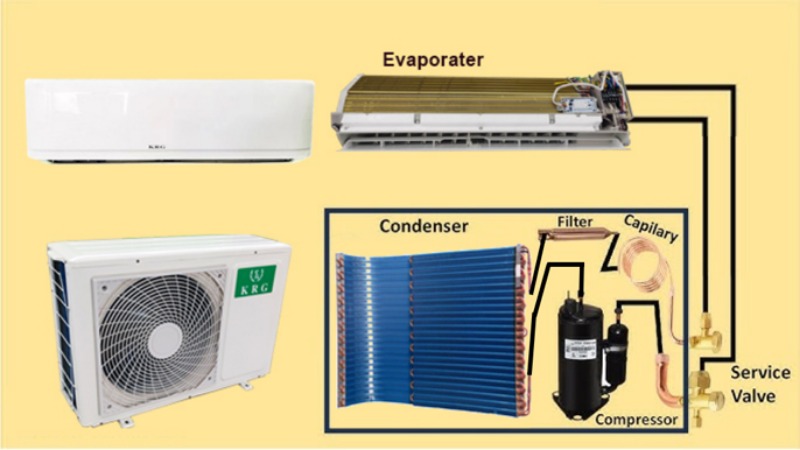
    The answer is the refrigerant circulation. The key point of cooling is not the cold air itself, but the continuous flow, phase transition, and energy transportation process of the refrigerant inside the copper pipes.


    I. An air conditioner is not to "create cold" but to "transfer heat."


    Here is a common misconception to clarify: the basis of the air conditioner is not to produce cooling but to remove heat from interior to exterior. While the "deliveryman" is the refrigerant that flows inside the copper pipe. The tube is just the vessel; what actually contributes to the cooling process is the absorption and releasing of the energy at the different states of the refrigerant.


    II. Why is "copper" pipe necessarily needed?


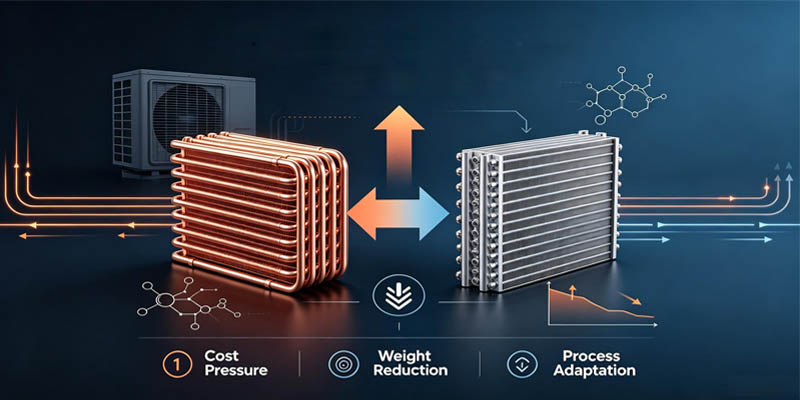
    Being selected as the piping material of the cooling system benefits from its three advantages:


    Good thermal conductivity: it conduces to the heat exchange of refrigerant and air.

    High-temperature and corrosion resistance: it adapts to the frequent exchange of the refrigerant in high- and low-pressure conditions.

    High reprocessability with reliable hermeticity: it is easy to weld and bend, reducing the risk of leakage.


    III. 4-steps circulation of the refrigerant in copper pipe


    1. Compressing: convert low-pressure gas into high-pressure, high-temperature gas


    At a state of low pressure and low temperature, the refrigerant is sucked in by the compressor; after being compressed, it becomes high pressure and high temperature. At this time, the temperature of the refrigerant is much hotter than outside of the room.


    2. Condensing: release heat outside, convert refrigerant from gas to liquid


    The high-pressure, high-temperature refrigerant (gas state) goes into the condenser (copper pipe + fins), changing from a gas state into a liquid state and releasing heat to the air outside through copper pipes.

    The key point here is the process from gas to liquid will release much heat.


    3. Throttling: sudden decrease of pressure, preparing for the heat absorption


    Being condensed, the refrigerant becomes high pressure with a medium temperature but in a liquid state.

    After passing through a small part (capillary or electronic expansion valve), the refrigerant pressure decreases suddenly, and together with the temperature, it becomes a low-temperature, low-pressure state mixed with gas and liquid.


    4. Evaporating: absorb heat inside, create "cooling"


    The low-pressure, low-temperature refrigerant (gas state) goes into the evaporator (copper pipe + fins). At this time the indoor temperature is higher than the refrigerant, which absorbs heat from the refrigerant through copper pipes and changes from a liquid state into a gaseous state.

    Evaporating is the process of absorbing heat, so that's why the indoor air has been cooled.


    IV. Why is the phase transition so important to the refrigerant?


    If the refrigerant uses normal liquid or gas, then the cooling efficiency will be very low.

    Absorbing or releasing a large amount of potential heat during the phase transition is the biggest value for the refrigerant. With the same temperature difference, it will transfer more heat than normal substances.

    That's why, by flowing backwards and forwards in the copper pipe, a little refrigerant could cool and heat the whole room.


    V. Heat exchange efficiency depends on the design of copper deeply


    Whether the refrigerant could work efficiently, it not only depends on itself but also on if:


    The copper pipe size is reasonable;

    The piping length is suitable;

    The fins structure and the distance between pipes;

    The inside surface of the copper pipe is clean and oil-free;

    Those details will directly affect the cooling speed, COP/EER, systematic stability, and lifespan.


  • Why Does the Air Conditioner Outdoor Unit "Smoke" in Winter? A Brief Introduction of Defrosting Mode.

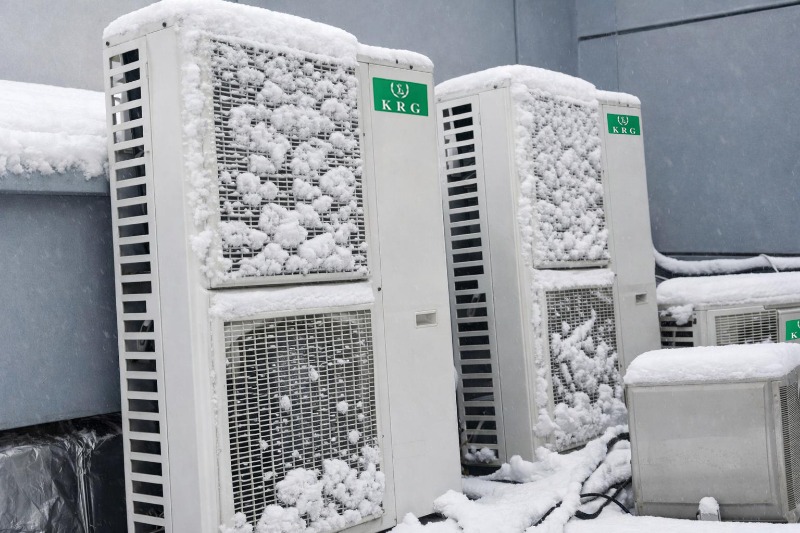
    In every winter, many users will face a phenomenon that when the air conditioner operates in heating mode, the outdoor unit will blow a batch of smoke, and sometimes there are sounds of water flow and shutdown of the motor. It seems the machine has malfunctions.

    Actually, most of the time this is not a failure but the operation of the auto defrost mode of the air conditioner. Here we will explain why it smokes in winter, how the defrost mode operates, and if it is harmful to the equipment.


    I. How does the air conditioner heat in winter?


    Under heating mode, the room air conditioner indoor unit performs as a condenser to release heat, while the outdoor unit acts as an evaporator to absorb heat. It brings energy from exterior to interior. Though the exterior temperature is 0℃, the air still contains energy, and the compressor could extract this part of the heat through refrigerant circulation.


    II. Why does frost form on outdoor surfaces?


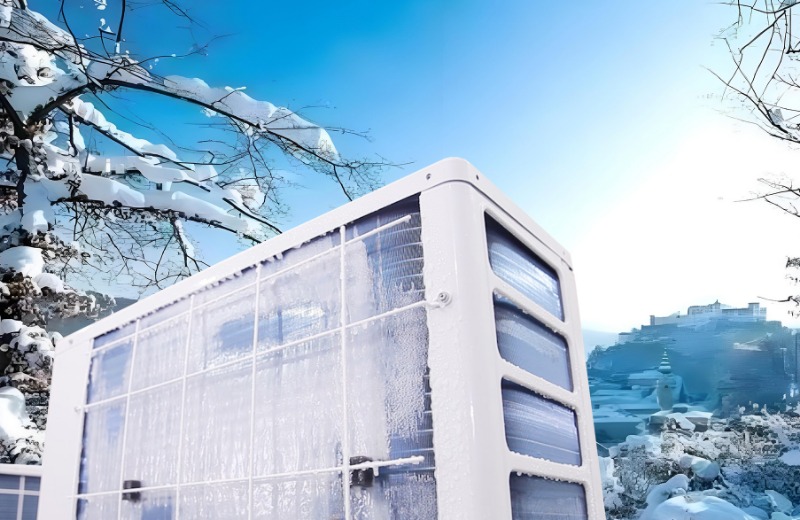
    When the temperature is low and the humidity is heavy outdoors, the surface temperature of the outdoor unit heating exchanger will be lower than 0°C. The steam in the air will condense under lower temperatures and form frost on the exchanger surface gradually.

    Particularly during 0℃ to 8℃ rainy days in high-humidity areas, it is easier to frost.

    The frost covering on the heat exchanger fins will lead to lower heat-exchange efficiency and weaker heating ability as a result of high energy consumption. If it remains without action, the heating performance will be worse and worse.


    III. What's the Defrosting Mode?


    When the detected frost reaches a level, the air conditioner will start the defrost process automatically.

    This function is easy; the air conditioner compressor will temporarily convert the rotating direction and the cooling cycle.

    This means the normal heating mode in the room will convert to heat the outdoor unit, melting the frost by using the high-temperature refrigerant in the copper pipe.

    This procedure will last 3-10 minutes, which is a common protection mechanism for air conditioners.


    IV. Why can we see white smoke?


    When the frost is melted by hot refrigerant quickly, it becomes water; some water is heated to evaporate, becoming steam; hot steam and cold air condensate and form plenty of small and slim water fogs, which look like smoke.


    In the meantime, you will see the outdoor fan stop working, the indoor unit stop supplying air, and hear sounds of water flow, which are all common phenomena.


    V. Why does the indoor unit not heat during the defrost procedure?


    When defrosting, the system is heating for the outdoor unit, and the indoor unit stops supplying air. This is to avoid blowing cold air indoors in winter and improve defrosting efficiency. Some air conditioners will show "DF" or "H1" or a defrosting symbol. After defrosting is finished, the air conditioner will resume heating automatically.


    VI. Is frequent defrosting normal?


    Based on the environmental conditions, in extremely cold and high-humidity weather, it defrosts once every 40-90 minutes normally.

    If defrosting occurs every 10 minutes, or the heating is obviously insufficient, or the outdoor unit freezes heavily, it would be a lack of refrigerant, sensor failure, or the blockage of the drainage pipe. At this time, it is suggested to arrange professional examination and maintenance.


    VII. How to reduce frequent defrosting?


    1. Ensure good ventilation for the outdoor unit;

    2. Ensure drainage unobstructed;

    3. Avoid frequent start-ups;

    4. Set a reasonable temperature. (22-24℃).


    We are a professional air conditioner manufacturer in China. Should you have any other questions in the industry, please don't hesitate to reach us!